 Reviews


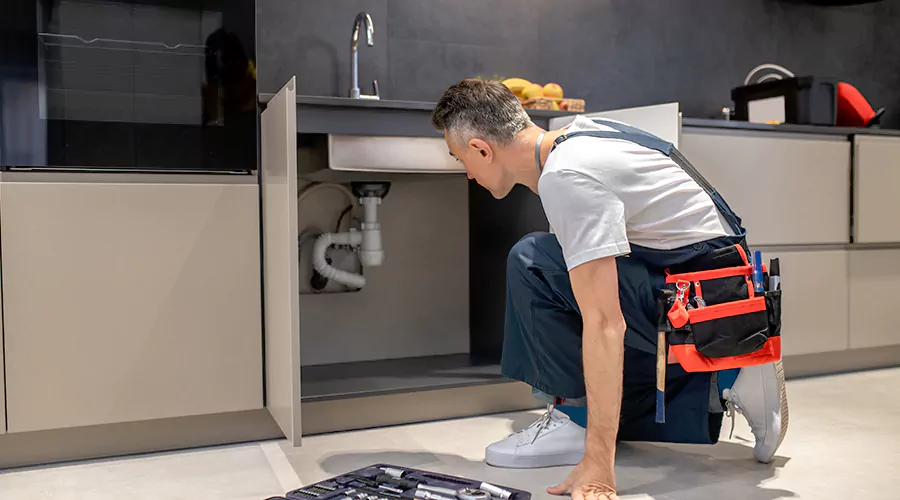
A slab leak is a leaking pressurized water line beneath your home's concrete foundation caused by corrosion, high water pressure or ground movement. Repairs average $2,280 including detection, ranging from about $300 for minor leaks to $6,750 for hard-to-reach ones.
The danger is invisibility. The pipe runs under tons of concrete, so the leak announces itself through your water bill and your floors rather than a puddle.
Every week of delay feeds the damage because pressurized water washes away the compacted soil supporting the slab which causes it to sink, shift and crack under its own weight.
How Plumbing Runs Under a Slab?
Millions of homes sit on concrete foundations with pipes below the living space. Plumbing in concrete slab foundation construction routes water supply and drain lines through or beneath the pour, and the design trades a basement's access for lower building cost.
- The layout explains the vulnerability: Under slab plumbing includes pressurized supply lines that run hot and cold water plus gravity drain lines, all installed before the concrete goes down. Slab plumbing became standard in postwar tract construction across warm-climate states, which is why slab leaks cluster in Texas, Arizona, California and Florida.
- Materials date the risk: Copper was the norm for plumbing in a concrete slab through the 1980s, and decades of contact with soil minerals slowly eats it. Homes plumbed after that era with plastic lines corrode less but still suffer from ground movement and abrasion.
Insider tip: find your home's build year and pipe material on the original permit or inspection report. Copper under a 1970s slab puts you in the highest-risk group.
What Causes a Slab Leak?
Three forces break pipes under concrete: chemistry, movement, and pressure. Common causes include poor installation, ground shifts from soil movement or earthquakes, and pipe corrosion from minerals in the soil and water. Most leaks involve at least two of these factors, making Slab Leak Repair important before the damage spreads or affects the foundation.
- Corrosion works slowest and wins most often: Soil chemistry attacks copper from the outside while aggressive water attacks from the inside, thinning the wall until pressure finds the weak point. Movement works faster, since expansive soils swell when wet and shrink when dry, putting constant stress on buried lines.
- Friction finishes the list: A leak in concrete slab plumbing often starts where a pipe rubs against gravel or the slab itself, because every pressure cycle vibrates the line slightly and decades of vibration wear a hole.
How the Damage Progresses?
A pinhole becomes a foundation problem on a predictable schedule. Water escapes first, soil erodes second and concrete moves third. The cost table shows why the calendar is the expensive part.
| Stage | What's happening | 2026 cost to act |
|---|---|---|
| Hidden pinhole | Water bill creeping up | $150 to $400 detection |
| Active leak found | Wet soil under slab | $1,500 to $4,000 spot repair |
| Repeat or multiple leaks | Failing pipe system | $4,000 to $15,000 reroute or repipe |
| Structural movement | Slab cracking and settling | $50,000 to $100,000 slab replacement |
The physics run quietly underneath. A concrete slab water leak erodes the supporting soil into mud that squeezes out from under the footing. Meanwhile a slab water leak on the hot line wastes energy too, running the water heater around the clock and raising that bill alongside the water bill.
Slab Leak Signs to Check Today
Slab leak symptoms show up in bills, floors and sounds before any visible water appears. Homeowners typically notice higher water bills, lower pressure, warm floor spots or the sound of running water first. Check all ten signs below this week.
- A water bill that jumped without a habit change.
- Warm spots on the floor, which mark a hot-line leak heating the slab.
- The sound of running water with every fixture off.
- A sudden drop in water pressure.
- Damp flooring or carpet that smells musty in one area.
- Cracks appearing in floor tile or the slab itself.
- A water heater that runs far more than it used to.
- Mildew or mold along baseboards with no plumbing above.
- Standing water or unusually lush grass beside the foundation.
- Low spots or unevenness developing in floors.
The warning signs of a slab leak escalate in that rough order, and a water leak under slab concrete rarely produces visible water until the late stages. Two or more matches mean move to the meter test now.
Insider tip: walk your floors barefoot on a cool morning. Feet find the warm spot of a hot-side leak that shoes and eyes miss completely.
The Water Meter Test
Your water meter proves or clears a hidden leak in 30 minutes for free. The test isolates the house from every known water use, so any meter movement comes from a leak. Run it before spending a dollar on detection.
- Turn off every fixture and appliance that uses water, including ice makers.
- Find your meter and photograph the reading, noting the small leak-indicator dial.
- Wait 30 minutes with no water use at all.
- Read again. Any movement confirms a leak somewhere in the system.
- Now close the house's main shutoff valve and watch the meter once more. Continued movement with the house valve closed puts the leak in the underground line, while a stopped meter points inside, and a slab line is inside for this purpose.
The test finds leaks without locating them. Location is the professional step, since a leak that causes continuous flow with no fixtures running still hides under hundreds of square feet of concrete.
Detection and Repair Options
Professionals locate a water leak under concrete slab surfaces without tearing the floor apart. Plumbers use pressure testing, acoustic leak detection, thermal imaging and moisture meters to pinpoint hidden leaks with minimal demolition. Detection costs $150 to $400, averaging $280.
Never skip that step. Electronic detection pinpoints the exact location and prevents unnecessary excavation, which is why guess-and-jackhammer quotes deserve a hard pass.
Repair paths for plumbing concrete slab homes split into three:
- Spot repair: Crews open a small precise section of slab and replace the damaged pipe length for $1,500 to $4,000. Best for one isolated leak in decent pipe.
- Rerouting: New lines run above the slab through walls and attic. Rerouting is the better long-term answer for corroded copper, and two or more slab leaks make the full reroute the smart call.
- Epoxy lining: Trenchless lining coats the pipe interior for $2,000 to $5,000 with no digging at all.
Access explains the invoice. A plumbing slab foundation repair costs more than the same pipe fix in a crawl space because concrete stands between the wrench and the leak, and most jobs run 1 to 4 days.
When to Call a Professional
Call a licensed plumber the moment the meter test confirms a leak. Contact a pro when you notice two or more slab leak signs, because hidden leaks grow more expensive as they damage flooring, walls and the foundation. This repair has no real DIY lane.
- The math backs the caution: DIY attempts average around $400 in materials, but the job goes wrong easily and failed attempts risk far more costly repairs, since a mislocated jackhammer hole adds slab restoration to the plumbing bill.
- Two follow-ups belong on every repair: Ask for a whole-house pressure reading, because pressure above 80 psi helped kill the last pipe and will kill the next. Then check for mold in the subfloor and baseboards after the repair, since slab leaks create chronic moisture under flooring.
Prevention Protects the Next Pipe
You can't repipe preventively for free, but four habits slow every cause. Combined they cost under $100 a year against a $2,280 average repair. Pressure control does the most work.
- Install a pressure regulator: If house pressure tests above 80 psi, since pressure stresses every buried joint.
- Soften aggressive water: Corrosive or mineral-heavy water shortens copper's life from both sides.
- Watch the bill monthly: A creeping baseline is the earliest sensor you own.
- Run the meter test twice a year: Thirty free minutes catches the pinhole stage, and early detection limits both the damage and the repair scope.
Conclusion
A slab leak is a pressurized pipe failing under concrete, and its cost tracks how long it runs undiscovered. The meter test finds it free, electronic detection locates it precisely and the repair method should match the pipe's overall condition rather than just today's hole. This week, run the 30-minute meter test, and you'll know where your foundation stands.